
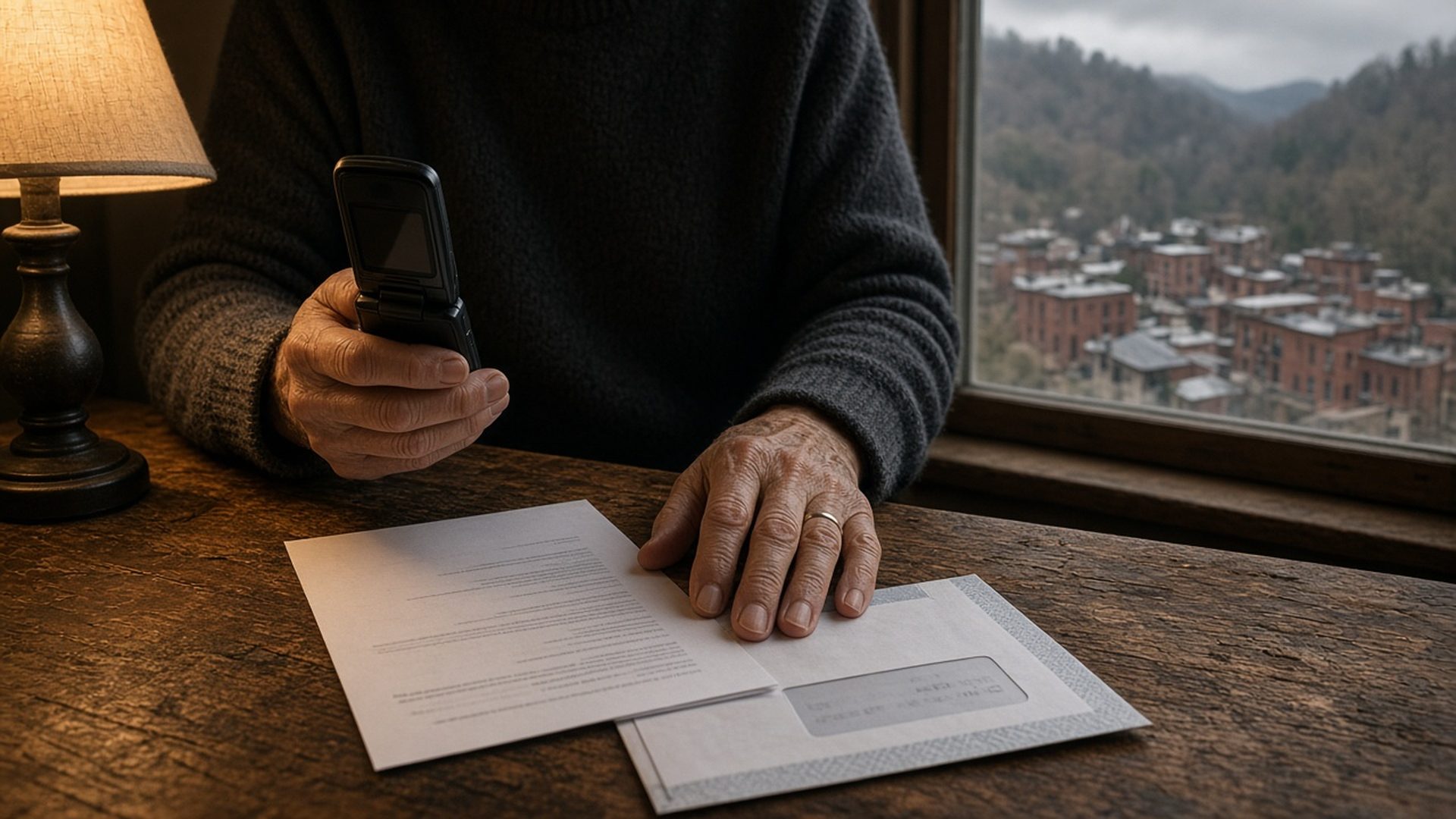
A worried daughter's phone call may be the reason an 80-year-old Grafton woman isn't still being drained by someone she thought was there to help her.
A 71-year-old Iowa woman is now sitting in the Tygart Valley Regional Jail on $500,000 bail, accused of swindling the elderly Taylor County woman out of $68,000. Carmen Burds, of Dubuque, Iowa, was extradited to West Virginia and arraigned Wednesday in Taylor County Magistrate Court on 10 criminal counts tied to exploiting and stealing from an elderly person.
According to Grafton police, the investigation started in October, when the victim's daughter called officers because she believed her mother was being scammed.
How police say the scheme worked
Investigators say it began with something that could land in anyone's mailbox: the Grafton woman noticed what looked like a new security charge on her credit card bill. She called a phone number about it, and that call is what police say led Burds to drive to West Virginia to meet her in person.
Police allege Burds told the woman she was an agent with the Federal Trade Commission and would help her set up a new bank account because her identity had been stolen. Authorities say Burds made several trips to West Virginia in the late summer, taking the woman to different banks, and told her not to tell anyone.
Burds faces two counts of financial exploitation of an elderly person, two counts of extortion, two counts of grand larceny, three counts of attempt to commit a felony and one count of fraudulent schemes. She is due back in Taylor County Magistrate Court for a hearing on Dec. 3 at 3:30 p.m. The charges are accusations, and she is presumed innocent unless proven guilty in court.
The red flags worth sharing at the Thanksgiving table
This case has the hallmarks of what's known as a government-impersonation scam, and it's a good one to talk over with parents and grandparents while the family is together this weekend:
- Real government agents don't move your money. The Federal Trade Commission doesn't open bank accounts for people, collect money, or show up to drive anyone to the bank.
- "Don't tell anyone" is a giant warning sign. Scammers insist on secrecy because family members are often the ones who spot the con, exactly as happened here.
- Be careful with phone numbers on surprise charges. If something odd shows up on a bill, call the number printed on the back of your own card or on your bank's official statement or website.
- Hang up and check. When someone claims to be from a government agency, end the call and look up that agency's contact information yourself.
Here in West Virginia, we look out for our neighbors, and this case is proof that one phone call from someone who cares can make all the difference. If you suspect an older loved one is being targeted, contact your local police department, and you can also report government-impersonation scams to the FTC at ReportFraud.ftc.gov.